
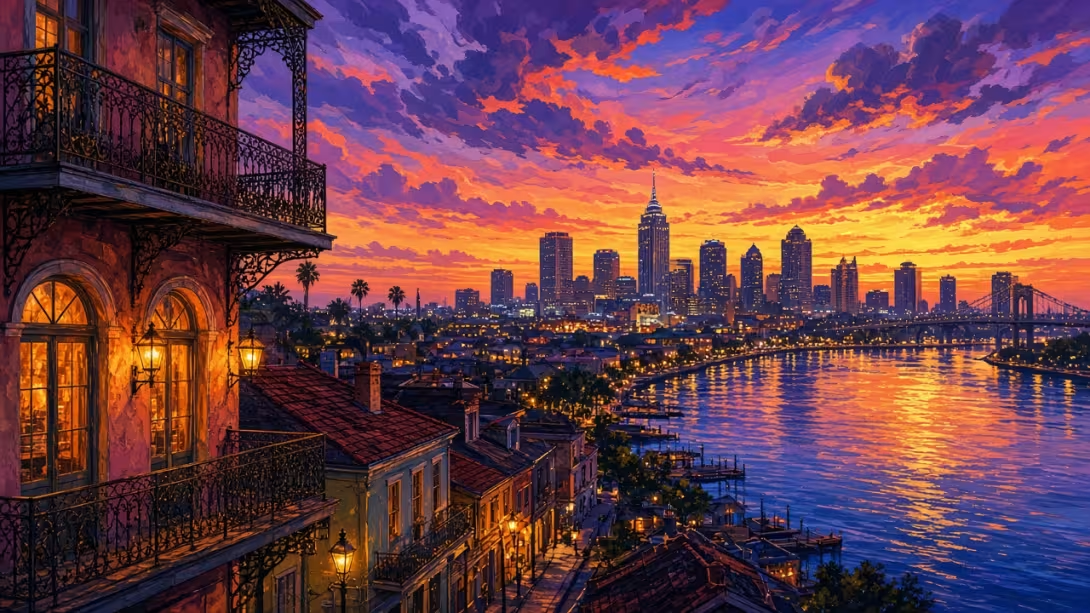
New Orleans: Where Music Breathes in Every Corner
New Orleans doesn't just have a music scene - music is woven into the city's DNA, flowing through streets like the Mississippi flows past the French Quarter. In a city where jazz funerals celebrate life, where second lines transform ordinary Sundays into moving parties, and where teenagers learn traditional jazz alongside hip-hop, the line between performer and audience dissolves into collective musical experience.
For musicians seeking open mics and jam sessions, New Orleans offers something fundamentally different from other American cities. This isn't a scene built around "making it" or climbing industry ladders. The music here serves deeper purposes - community building, cultural preservation, genuine expression. When you play at a New Orleans jam, you're not auditioning for anything. You're participating in a living tradition that stretches back over a century.
The Geography of Sound
New Orleans' open mic and jam scene reflects the city's unique neighborhood geography. Frenchmen Street in the Faubourg Marigny has evolved into the city's premier live music corridor, offering a more authentic alternative to the tourist-heavy Bourbon Street. Here, venues like Cafe Negril have anchored the local music community for decades, long before Frenchmen Street gained worldwide recognition.
The Uptown neighborhoods - including the Garden District along Prytania Street and the Freret Street corridor - provide neighborhood venues where locals gather without the tourist intensity of downtown. These spaces offer musicians more intimate, community-focused performance opportunities where regulars actually know your name and musical style.
The Oretha Castle Haley Boulevard corridor carries particular significance, representing New Orleans' African American cultural heritage and ongoing creative vitality. Venues like Ashe Cultural Arts Center explicitly center cultural preservation alongside artistic innovation, recognizing that music serves purposes beyond entertainment.
The Tuesday Blues Tradition
Every Tuesday night at Cafe Negril on Frenchmen Street, the Super-Most-Fantastic-Blues-N-Such-Jam demonstrates what makes New Orleans' jam scene distinctive. Led by guitar legend John Lisi and the Delta Funk band, this open jam welcomes musicians with instruments and vocals to participate in an evening of blues, funk, and related styles.
What distinguishes this jam from similar events elsewhere? The house band provides genuinely solid backing - these aren't beginner players struggling through standards, but seasoned professionals who understand how to support jammers at various skill levels. The multiple sets throughout the evening (starting at 7:00 PM) allow for sustained musical exploration rather than rushed three-song rotations. And the Frenchmen Street location means you're playing for an audience that came specifically for live music, not just bar patrons tolerating background noise.
The venue's layout enhances the experience. Ground floor high-top tables keep dancers and listeners close to the action, while an elevated VIP section offers optimal sightlines for those who prefer to watch. This thoughtful design recognizes that jam sessions need both participants and appreciative audiences to truly thrive.
Freret Street's Community Vibe
Another Bar on Freret Street represents a different facet of New Orleans' musical ecosystem. Every Thursday at 8:00 PM, host Duane Bartels leads a weekly open mic for music and poetry. The format is deliberately inclusive - bring whatever you want to perform, sign up on the spot, and share your art with a supportive crowd.
The venue's eclectic character reflects the Freret Street neighborhood's revitalization. Board games, karaoke on Sundays, comedy open mics on Tuesdays, and affordable drinks create a genuine community gathering place where the Thursday music open mic is one component of broader creative programming. This integration of music into a larger social context reflects New Orleans' holistic approach to culture - it's not compartmentalized into specialized venues but woven throughout daily life.
The Garden District's Bi-Weekly Tradition
The Prytania Bar, perched on the edge of the historic Garden District, hosts open mic nights every other Friday at 9:00 PM. Host Tim Curry leads the proceedings using the venue's basic but functional 4-channel PA system with two microphones and stands. The small stage area (not raised) creates intimacy between performers and the crowd gathered around the distinctive 360-degree bar.
This neighborhood bar exemplifies New Orleans' democratic approach to music. No fancy equipment or production values - just a welcoming space where local musicians can perform for neighbors and visitors exploring beyond the tourist zones. The bi-weekly schedule maintains consistency while allowing the venue to preserve its regular bar atmosphere on alternating Fridays.
Cultural Centers and Community Spaces
Ashe Cultural Arts Center's monthly open mic at Adinkra Lounge demonstrates how New Orleans integrates musical performance with cultural preservation and community building. These Friday evening events (7:00 PM - 11:00 PM) welcome performers of all levels to share their gifts, with doors opening at 7:00 PM and mic opening at 7:30 PM.
What makes this open mic significant extends beyond the music itself. Ashe Cultural Arts Center explicitly centers African and African American culture, recognizing that artistic expression carries cultural, historical, and social dimensions. Performing here means participating in cultural preservation and community empowerment, not just showcasing individual talent. The event is free and open to the public, with sign-ups happening on the spot - accessibility and inclusion as core values, not afterthoughts.
The Frenchmen Street Phenomenon
While Cafe Negril anchors the jam session scene, Frenchmen Street's broader musical ecosystem deserves attention. Within a few blocks, you'll find multiple venues offering live music every night of the week. The Spotted Cat Music Club, d.b.a., and other establishments create an environment where musicians can easily catch multiple shows in a single evening, learning from peers and building the networks essential to musical growth.
This concentration of venues creates unique opportunities. Musicians can perform at a jam session, then walk down the street to catch sets by professional bands whose approach to New Orleans music might inform their own playing. The cross-pollination between venues, styles, and skill levels produces the kind of musical education that can't be replicated in formal classroom settings.
Importantly, Frenchmen Street maintains genuine local character despite its fame. Unlike Bourbon Street's tourist-oriented cover bands, Frenchmen Street venues prioritize authentic New Orleans music performed by local musicians. Visitors come here seeking genuine cultural experiences, creating audiences that actually appreciate what they're hearing rather than treating music as mere background entertainment.
The Accessibility Factor
New Orleans' open mic and jam session scene consciously removes barriers to participation. Most events are free with no cover charges. Venue drink minimums exist but remain reasonable - this is a city where musicians and service industry workers comprise significant portions of venue audiences, so pricing reflects economic reality rather than extracting maximum profit.
The sign-up processes are deliberately informal. Show up, put your name on the list, perform when called. No pre-registration, no complicated booking procedures, no networking prerequisites. This accessibility ensures that emerging musicians, visitors passing through town, and long-time professionals can all participate on equal footing.
Age policies vary by venue - some maintain 21+ restrictions based on alcohol licensing, while others welcome all ages. This variation allows musicians at different life stages to find appropriate performance opportunities. Family-friendly events like the Ashe Cultural Arts Center open mic ensure that younger musicians can begin developing performance skills in supportive environments.
The Musical Lineage
New Orleans' approach to musical education and skill development differs fundamentally from other cities. While formal music programs exist, the city's real conservatory is its network of jam sessions, street performances, and neighborhood gigs where musicians learn by participating in living traditions.
When you sit in at a New Orleans jam, you're joining a lineage that includes some of American music's most influential innovators. The musical vocabulary, the rhythmic sensibilities, the improvisational approaches - these emerged from generations of musicians learning from each other in exactly these kinds of settings. A blues jam at Cafe Negril connects directly to the musical traditions that shaped rhythm and blues, funk, and rock and roll.
This lineage isn't abstract history - it's embodied in the musicians leading these jams and teaching by example rather than formal instruction. When experienced players offer suggestions or demonstrate approaches, they're passing on knowledge gained through decades of participation in New Orleans' musical community. This oral/aural tradition continues thriving precisely because venues maintain consistent jam sessions where transmission can occur.
Beyond the Music: Community and Culture
New Orleans musicians understand that music serves purposes beyond artistic expression or career advancement. Music builds and maintains community. It preserves cultural traditions. It creates space for collective joy in a city that's weathered devastating hurricanes, economic hardship, and ongoing challenges of inequality and gentrification.
This broader purpose infuses the city's open mic and jam session scene with particular spirit. Performances aren't just individual achievements to be applauded - they're contributions to collective experience. The audience isn't just consuming entertainment - they're participating in cultural practice. The distinction between performer and listener becomes fluid; today's audience member might be next week's jammer.
This communal approach creates remarkably supportive environments for musicians taking creative risks. New Orleans audiences understand that growth requires experimentation, that mistakes are part of learning, that the process matters as much as polished results. This cultural knowledge - that music is a collective journey rather than individual competition - makes the city's jam sessions particularly welcoming to developing musicians.
The Second Line Spirit
New Orleans' famous second line tradition - where parade followers become active participants, dancing and celebrating alongside the brass band - perfectly captures the spirit that animates the city's open mic and jam session scene. The distinction between organized performers and spontaneous participants dissolves. Everyone's contribution matters. The collective energy exceeds what any individual could generate alone.
This second line spirit appears in how jam sessions function. The house band provides structure and leadership (the "first line"), but the musicians who sit in, the dancers who respond to the music, the audience members who shout encouragement - all become essential participants (the "second line") in creating the evening's musical experience. Remove any element, and something essential is lost.
Practical Realities
For musicians considering New Orleans' jam session scene, some practical considerations matter. The city's climate means outdoor venues and stages can be brutally hot in summer months - hydration and appropriate clothing choices aren't optional. Street parking can be challenging in popular areas like Frenchmen Street, especially on weekend nights, so arriving early or using public transportation makes sense.
The cultural expectation that musicians tip other musicians runs strong in New Orleans. If you're enjoying a jam session where a house band provides backing, contribute to their tip jar. This direct support model helps sustain the musicians who make these events possible. Similarly, buying drinks and food at venues hosting free events ensures they can continue providing space for music.
New Orleans maintains particular musical etiquette that may differ from other cities. Listen carefully before jumping in - understand the groove, the feel, the musical conversation already happening. Respect the host's leadership and the house band's aesthetic choices. Remember that these aren't just casual hangouts but continuation of serious musical traditions that deserve appropriate reverence even while remaining joyful and accessible.
The Post-Katrina Musical Landscape
Hurricane Katrina in 2005 devastated New Orleans physically and culturally, displacing musicians and destroying venues. The recovery process revealed the essential role that music plays in the city's identity and resilience. Musicians returned to a city where many venues no longer existed, economic conditions remained dire, and the future seemed uncertain.
Yet the jam sessions came back. The open mics resumed. The musical traditions that sustained New Orleans through previous challenges once again provided foundation for recovery. Current venues like Cafe Negril, Another Bar, and The Prytania Bar represent continuity - spaces that either survived the hurricane or emerged in its aftermath, committed to maintaining the musical culture that defines New Orleans.
This historical context matters for understanding the current scene. These aren't just entertainment venues - they're cultural institutions that helped rebuild a city's soul. The musicians leading jams and the audiences supporting them recognize this significance. There's nothing casual about the commitment to keeping New Orleans' musical traditions alive and accessible.
Why New Orleans Matters
For musicians elsewhere seeking to understand what thriving local music scenes look like, New Orleans provides essential lessons. Music must serve community purposes beyond individual career advancement. Venues must prioritize authenticity over profit maximization. Audiences must actively support rather than passively consume. Musical traditions require consistent spaces and practices for transmission between generations.
New Orleans demonstrates that music scenes don't emerge spontaneously - they're built and maintained through deliberate commitment by musicians, venue owners, audiences, and cultural organizations. The open mics and jam sessions happening weekly across the city represent this commitment in action. They're investments in musical culture's future, ensuring that New Orleans' unique musical heritage continues evolving while remaining rooted in tradition.
For visiting musicians, New Orleans' jam sessions offer rare opportunity to participate in authentic musical culture rather than just observing it. Bring your instrument, find a jam that fits your style, sign up, and contribute your voice to the ongoing musical conversation. You'll experience something fundamentally different from most American cities' music scenes - not performance as commodity or career stepping stone, but music as essential human expression and community practice.
The Tuesday blues jam at Cafe Negril, the Thursday open mic at Another Bar, the Friday sessions at Prytania Bar, the monthly gatherings at Ashe Cultural Arts Center - these aren't just events on a calendar. They're living manifestations of New Orleans' commitment to music as central to community life, cultural preservation, and collective joy. In a country where music increasingly exists as background to commercial activity, New Orleans maintains spaces where music remains the point, the purpose, the reason people gather.
Come with your instrument. Come with respect for the traditions being honored. Come ready to listen and learn as much as to perform. Come understanding that you're participating in something larger than yourself - musical culture that has survived hurricanes, economic hardship, and cultural pressures toward homogenization. Come ready for the second line spirit, where your contribution joins with others' to create something none of you could achieve alone.
That's New Orleans. That's why the music matters. That's why these jam sessions and open mics represent more than entertainment - they're essential cultural practice, connecting past to future through present moment musical expression. And that's something worth celebrating, supporting, and participating in with all the joy and reverence it deserves.